One of the most important factors of software development can be the choice of the right development methodology for a successful project. The pros and cons are the principle properties of Agile and Waterfall, the two most popular ones in this field. Understanding the distinction could help you decide which of the two methodologies is most appropriate for your project. Let’s take a closer look at both methodologies.
Understanding the Agile Methodology
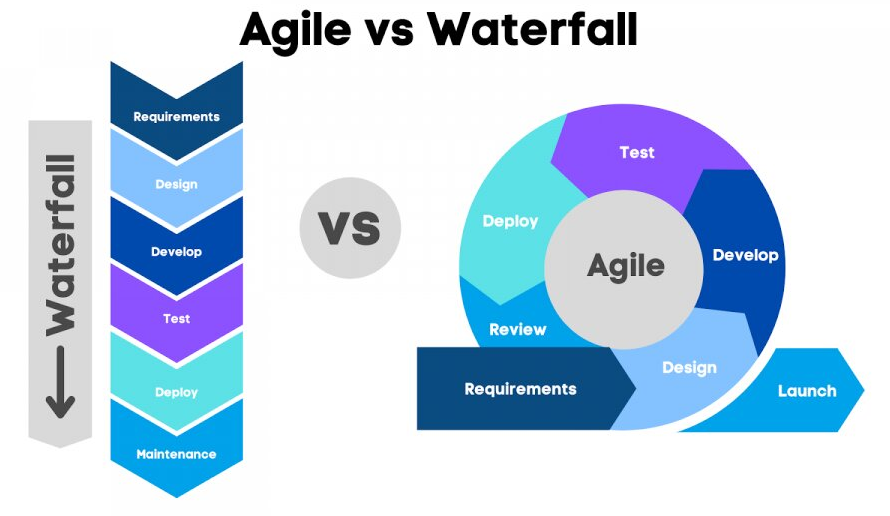
The practice of Agile is iterative and flexible model of software development which allows the team to redo the work all over again to get it right. It concentrates on the delivery of small, workable parts of a project regularly, usually in 2-4 week cycles known as sprints. The Agile methodology has as its central features the aspects of collaboration, customer feedback, and continuous improvement. It is a method that makes possible for the team to adapt to the changes immediately and make sure that the end product fits the user’s need.
Some of the major features of Agile are:
· Frequent Deliverables: Teams deliver small updates often, allowing for quick feedback and adjustments.
· Collaboration: Agile encourages constant communication between developers, stakeholders, and users.
· Flexibility: Agile is designed to change, in a way that allows the requirements to be reshuffled and thus, the project is well-suited for Agile.
In the case of Agile, when flexibility and the ability to change are needed for projects such as with software that needs regular updates or complex requirements, the latter is the best choice.
Pros:
1. Flexibility and Adaptability: Agile allows for frequent changes and updates throughout the project. Teams can easily adapt to evolving customer needs, market conditions, or any new insights.
2. Faster Delivery: With Agile's iterative cycles (sprints), teams deliver working versions of the product quickly, allowing stakeholders to see progress and provide feedback sooner.
3. Customer Collaboration: Agile emphasizes constant communication with stakeholders, ensuring the product meets their expectations and is aligned with their needs.
4. Improved Quality: Regular testing and feedback during each sprint help identify and resolve issues early, resulting in a higher-quality final product.
5. Enhanced Transparency: Agile offers greater visibility into the development process for both the team and stakeholders, promoting trust and alignment.
6. Continuous Improvement: Agile encourages teams to reflect on their processes at the end of each sprint, which fosters a culture of continuous improvement.
Cons:
1. Scope Creep: Since Agile allows for ongoing changes, there's a risk of scope creep, where the project may expand beyond the initial plan and timeline.
2. Requires Experienced Teams: Agile relies heavily on communication, collaboration, and self-organizing teams. Without experienced and motivated team members, Agile can be challenging.
3. Time-Consuming Meetings: Agile methodologies often require frequent meetings, like daily stand-ups and sprint reviews, which can consume a significant amount of time.
4. Unclear End Point: Agile's flexible nature can make it difficult to define a clear endpoint for the project, potentially leading to continuous work without a defined finish.
5. Resource Intensive: Agile may require more resources in terms of time and personnel for its iterative process, which may not be suitable for smaller teams or projects with limited resources.
Overall, Agile is best suited for projects with changing requirements, fast-paced environments, and teams capable of handling its demands. However, it may not be ideal for projects that need rigid structure and fixed requirements from the outset.
Waterfall Approach: When to Apply
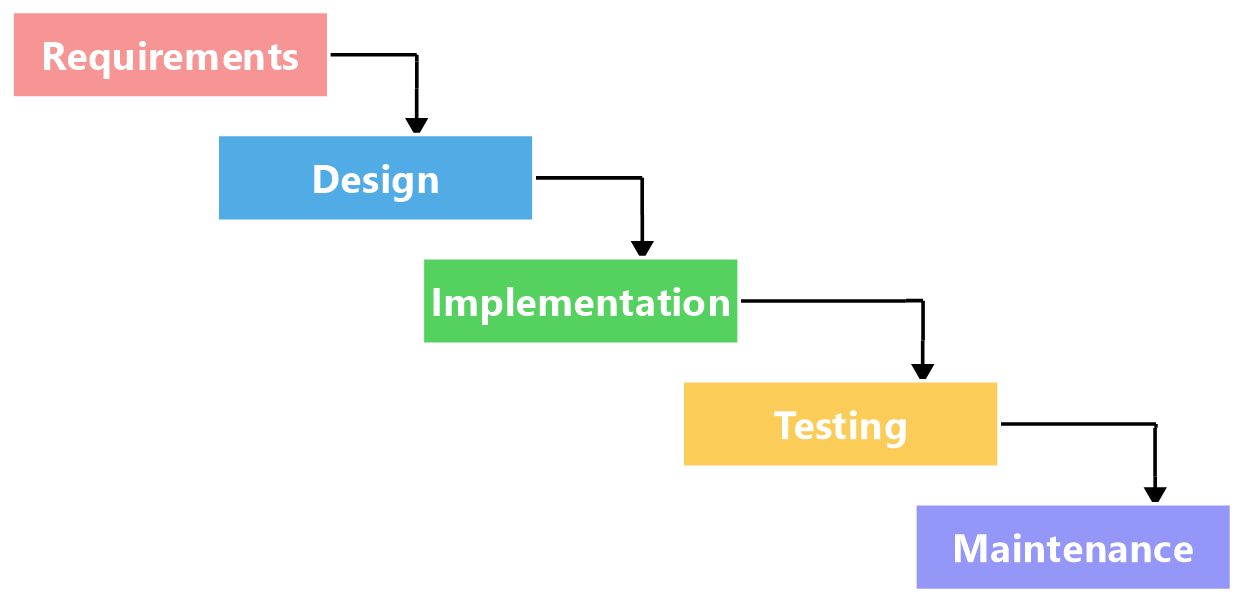
Waterfall model.png20.29 KBWaterfall model is a more traditional, linear way of developing software. This approach has all the project phases, including design and development and testing, strictly in order. The predictable path of the project leads from start to finish because each step is dependent on the previous one.
Waterfall is best applied when the following holds true:
Clearly Defined Requirements: The project requirement is clear right from the beginning and will hardly change.
Fixed Scope: There is little to no flexibility of scope, budget, or timeline.
Structured Environment: The project requires an organized, step-by-step process with minimal changes.
Waterfall works well for projects with simple, well-understood requirements, such as a small business website or software where guidelines are very clear in advance.
Pros:
1. Clear Structure: The Waterfall model is straightforward and follows a set sequence of steps, making it easy to understand and manage, especially for those new to software development.
2. Easy to Manage: Since the phases are well-defined, it’s easier to plan, track, and manage progress. This is beneficial for teams that are highly organized and prefer a clear roadmap.
3. Well-Defined Requirements: Waterfall works well for projects with clear and stable requirements. If the scope of the project is fixed and unlikely to change, the Waterfall approach is effective.
4. Ideal for Small Projects: For small, less complex projects where requirements are unlikely to change, Waterfall can be an efficient and cost-effective choice.
5. Easy Documentation: Waterfall emphasizes thorough documentation at each stage, ensuring that there is a clear record of the entire development process.
Cons:
1. Inflexibility: Once a phase is completed, it’s difficult to go back and make changes. This can be problematic if new requirements or insights arise after development has started.
2. Late Testing: Testing occurs only after the development phase is complete, which means issues are often identified late in the process. This can lead to expensive fixes and delays.
3. High Risk: Since no working product is available until the end of the project, there’s a high risk that the final product might not meet user expectations or may require major revisions.
4. Not Suitable for Complex Projects: For large, complex, or evolving projects, Waterfall may not be ideal as requirements are likely to change, and the model is not designed to accommodate such shifts easily.
5. Longer Timeframes: Since each phase must be completed before moving to the next, the Waterfall approach can result in longer development cycles, making it less suitable for fast-paced or time-sensitive projects.
In summary, the Waterfall model is best for projects with clear, stable requirements and defined deliverables. It’s less adaptable to changes and can be inefficient for projects that evolve over time or require ongoing collaboration and feedback.
Differences between Waterfall model and Agile model
| Waterfall Model | Agile model | Linear and Sequential: Projects progress through distinct phases (requirements, design, implementation, testing, deployment) in a strict order. Completion of one phase is necessary before moving to the next. | Iterative and Incremental: Development is divided into short cycles (sprints) with frequent feedback and adjustments. | Rigid: Changes are difficult to incorporate once a phase is finished. Requires extensive upfront planning. | Flexible: Changes are embraced and incorporated throughout the project lifecycle. | Documentation-Heavy: Emphasizes detailed documentation throughout the process. | Customer-Centric: Focuses on continuous customer involvement and feedback. | End-Product Focus: Primarily focused on delivering the final product at the end of the project. | Collaborative: Emphasizes teamwork and communication within the development team. | Less Flexible: Adapting to changes or new requirements can be challenging. | Adaptable: Well-suited for projects with evolving requirements and uncertain outcomes. | Suitable for: Projects with well-defined requirements and minimal uncertainty. | Suitable for: Projects that require flexibility, rapid adaptation, and frequent feedback.
Hybrid Approach: Putting It All Together
Sometimes, a mix of both Agile and Waterfall yields the best solution-the Hybrid Approach. Herein, it melts the flexibility of Agile into the structured nature of Waterfall. Whatever be the case, the projects that need predictability from Waterfall in some stages, adaptability for other stages will fit the hybrid model.
Example:
Planning and Design (Waterfall): You might use Waterfall for initial planning and design because these phases require clear, upfront decisions.
Development and Testing (Agile): Once the design is complete, you can switch to Agile for development and testing, where feedback and adjustments are more frequent.
This approach is ideal for those projects that contain fixed and flexible elements, such as product development, which has some predefined set of features yet at the same time may allow user-driven changes.
Real-World Examples of Agile and Waterfall in Action
Let's look at how both methodologies work in real-life scenarios.
Agile in Action: A startup creating a mobile app might favor Agile because the features are most likely to evolve by means of user feedback. By releasing updates and making improvements on a regular basis, the team can maintain flexibility and respond to changing market needs.
Waterfall in Action: The project to provide the government with a secure, highly regulated system can be a good fit for Waterfall. Here, the scope is fixed, and the system should act in correspondence with strict rules. In this respect, it is hardly possible to change the requirements in the very process of system development. Waterfall guarantees that every step goes very structurally and without unexpected changes.
Conclusion
Either Agile or Waterfall-it all depends on the nature of your project. Agile will fit projects that require flexibility, feedback from continuous improvement, and adaptation to changes. In cases where the project has well-defined requirements with clear boundaries and a fixed timeline, Waterfall might be more suitable. Sometimes an integration of both may offer the best option in such cases. Choose the methodology that best fits your needs, and it shall put you on the path to success.